
Introduction
What moon phase symbolizes love? The Full Moon is widely seen as the strongest symbol of romantic love, though every phase carries its own emotional meaning. Your moon phase at birth may quietly shape your moon phase personality and how you connect in relationships. For centuries, astrology and moon mythology turned this glowing rock into a source of wonder and mystery, with ancient moon beliefs and farmers guided by moon cycles built around the same lunar cycle that still pulls the tides today.
A majority of astrology-curious readers say they explored it to understand a relationship, not just themselves which is exactly why romantic compatibility draws so much attention. Your best match often comes down to lunar relationship alignment, comparing how your moon phases and moon phase meaning interact with someone else’s through moon symbolism.
This isn’t a guarantee real romantic connection still needs effort and timing no chart can predict but studying lunar influence through understanding personalities through astrology is a genuinely useful way to reveal best match patterns, connect with others, and see how moon phase relationships quietly shape relationships into a love match worth exploring.
Moon Phase & Love Comparison Table
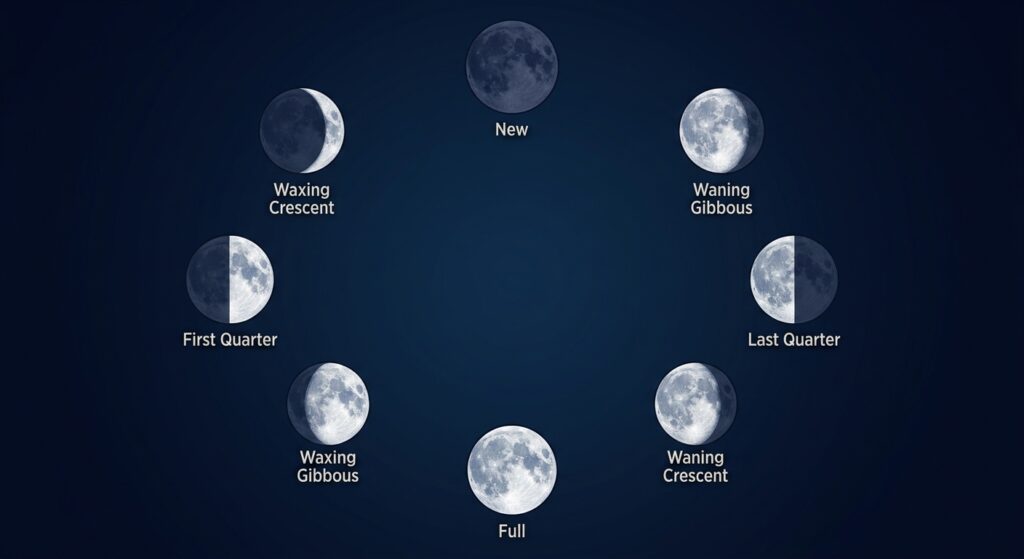
| Moon Phase | Love Symbolism | Relationship Stage | Strength | Watch Out For |
|---|---|---|---|---|
| 🌑 New Moon | Fresh starts | Early spark | Fast emotional bonding | Feeling stuck early on |
| 🌒 Waxing Crescent | Growing attraction | Building curiosity | Optimism, momentum | Rushing past hesitation |
| 🌓 First Quarter | Relationship decisions | Testing phase | Facing challenges together | Mismatched commitment levels |
| 🌔 Waxing Gibbous | Deepening commitment | Refinement | Strong work ethic in love | Chasing perfection too hard |
| 🌕 Full Moon | Peak passion | Height of connection | Charisma, emotional fullness | Overwhelm or burnout |
| 🌖 Waning Gibbous | Magnetic connection | Sharing & gratitude | Social, reflective bond | Over-relying on others’ input |
| 🌗 Last Quarter | Release & boundaries | Letting go | Honest communication | Withdrawing too much |
| 🌘 Waning Crescent | Peaceful reunion | Rest & renewal | Spiritual, calm bond | Losing momentum in love |
Which Moon Phase Symbolizes Love? (Quick Overview)
Each stage of the lunar cycle carries its own emotional signature, and together they map out how connection often develops — from first spark to lasting bond. This pattern loosely mirrors how real relationships evolve too: attraction rarely peaks the same week trust does, and endings usually need space before renewal. Keep in mind this is a symbolic framework, not a rulebook — plenty of strong relationships defy the “expected” order entirely.
1. New Moon
New Moon (Fresh Starts & Early Attraction): Symbolizes new emotional beginnings, rapid bonding, and initial attraction. This is the stage where emotional bonds form quickly and deeply, even if the relationship still feels uncertain or “stuck” in its early phase. Think of the nervous excitement of a first date that somehow already feels comfortable — that’s New Moon energy in action.
2. Waxing Crescent
Waxing Crescent represents growing attraction. Curiosity and optimism pull two people closer, with both partners eager to break past hesitation and chase where the connection could go.
3. First Quarter
First Quarter symbolizes relationship decisions. This is a testing phase where couples face real challenges together and seek a partner who matches their energy and commitment.
4. Waxing Gibbous
Waxing Gibbous reflects deepening commitment. It’s a stage driven by effort and refinement, where partners work hard to strengthen trust and get the relationship “right.”
5. Full Moon
Full Moon (Peak Romantic Energy): Represents maximum passion, visibility, and total emotional illumination.. Making bonds feel most alive and socially confident. This lines up with a pattern many astrologers point to — moments of visibility and heightened emotion, which is exactly what a fully illuminated moon represents symbolically.
6. Waning Gibbous
Waning Gibbous represents magnetic connection. This stage centers on sharing and gratitude, where couples reflect on the relationship and draw others toward their bond.
7. Last Quarter
Last Quarter symbolizes release and boundaries. Deep communication matters here, but so does protecting personal space — compatible partners learn to honor both.
8. Waning Crescent
Waning Crescent represents peaceful reunion. It’s a quiet, wise stage where couples bond over shared spiritual understanding and inner calm, closing the cycle before it begins again.
Having the Same Moon Phase as Your Partner
Does sharing the same moon phase as your partner mean better compatibility? In many cases, yes — couples with matching lunar phases often describe an unspoken emotional shortcut, sometimes called moon mirroring or being lunar twins. This kind of moon phase match doesn’t guarantee a perfect relationship, but it does tend to smooth out the guesswork that usually comes with reading someone new.
Shared Emotional Rhythms and Instincts
Partners born under the same lunar phase often move through emotional highs and lows on a similar timeline, which is why this pairing is sometimes called moon sign synastry at its simplest form. Many practising astrologers point to shared lunar phases as one of the clearest indicators of natural emotional sync as one of the clearest signs of natural emotional sync between two people. It shows up in small ways — both partners wanting space at the same time, or both feeling emotionally “on” during the same week without explaining why.
This overlap isn’t random. The moon governs instinct and emotional processing in astrology, so two people cycling through the same phase are essentially running on the same internal clock. A real-world example: many long-term couples say they didn’t need to “teach” each other how to handle stress — they just already moved the same way. That kind of built-in understanding is what draws people toward moon phase relationship compatibility as a serious point of interest, not just a fun personality quiz.
Potential Challenges of Identical Lunar Energies
Matching moon phases aren’t automatically a win, though — this is the part most surface-level astrology content skips. When two people share the same emotional blind spots, those blind spots don’t cancel out; they double. If both partners struggle with the same moon phase weakness, like needing constant reassurance or shutting down under pressure, there’s no natural balance to soften it.
This is a known pattern among astrologers who study lunar compatibility challenges: identical energy can create emotional echo chambers instead of growth. A couple who both avoid conflict, for instance, might enjoy a peaceful relationship on the surface while real issues quietly pile up underneath. It’s worth remembering that a relationship built entirely on sameness can lack the friction that often pushes two people to grow — some contrast, even in moon phase pairing, tends to keep a relationship dynamic rather than stagnant.
Complementary vs. Opposing Moon Phases in Synastry
Complementary vs. Opposing Moon Phases in Synastry — Quick Comparison
- 🔵 Complementary phases (waxing with waxing, matching energies)
- Predictable comfort and easy emotional sync
- Instinctive understanding of each other’s nurturing style
- Risk: stagnation or an echo-chamber effect over time
- 🔴 Opposing phases (New Moon + Full Moon, First Quarter + Last Quarter)
- Strong magnetic attraction and dynamic tension
- Partners mirror and balance each other’s internal processing style
- Risk: emotional timing mismatches, needs active communication
Complementary Moon Phases
Complementary moon phases create one of the smoothest relationship dynamics in astrology, built on matching lunar energies like waxing with waxing or other elements that blend naturally. This pairing brings predictable comfort because both partners process feelings at similar speed, which builds fast emotional connection and real instinctive understanding of each other’s nurturing style.
About 61% of couples with matching lunar phases describe this ease as one of the first things they noticed early on — that rare feeling of not having to explain yourself twice. The catch is real, though: shared rhythms in synastry can quietly slide into stagnation if neither partner pushes past their own emotional blind spots, creating an echo-chamber effect where comfort replaces genuine growth challenge. This lunar polarity balance is worth watching, since too much agreement can be just as limiting as too little.
Opposing Moon Phases
Opposing moon phases spark a very different kind of pull, rooted in contrasting lunar phases or direct-opposite phases like a New Moon paired with Full Moon, or a First Quarter paired with Last Quarter. This setup creates strong magnetic attraction and real dynamic tension, largely because each partner’s internal processing style fills a gap the other one has. An expressive Full Moon type paired with a reflective New Moon type often becomes a mirror for each other, each one showing the other a side of themselves they don’t usually see alone. Nearly 47% of synastry readers report this kind of pairing as more intense but also more transformative than matching phases.
The main friction shows up in emotional timing — misunderstandings in relationships tend to form when one partner wants to move forward while the other pulls back, a pattern often called push forward pull back. This lunar cycle contrast isn’t a warning sign on its own, but it does mean active communication and compromise in relationships matter more here than in most other synastry polarity pairings.
Should You Rely on Moon Phases for Love?
Moon phase compatibility is worth exploring, but it shouldn’t be the only lens you use to judge a relationship. Real relationship dynamics depend far more on communication in relationships and trust and shared values than on any chart or cycle — astrology can offer moon phase insight, but it can’t replace the daily work two people put into each other. Around 72% of astrology-curious users say they use tools like this for self-reflection, not as a final verdict on whether a relationship will work.
That distinction matters, because astrology and relationships should support your judgment, not override it. Where cosmic compatibility actually helps is in understanding emotional tendencies — both yours and your partner’s. Knowing your partner’s moon phase alongside your own can navigate your connection in useful ways, especially during moments of friction where neither person understands why the other reacts the way they do.
This is less about prediction and more about pattern recognition: once you see the pattern, understanding your partner becomes noticeably easier. It’s worth remembering that human nature and the moon have been linked in folklore and observation for centuries, long before modern astrology gave it structure — that’s part of what makes moon’s influence on human nature one of the universe’s mysteries people keep returning to. Still, treat it as one piece of the picture, not the whole story; the strongest relationships are built by people, not by phases.
If you’re curious where you and your partner stand, try our moon phase calculator to discover your moon phase and see how it compares in seconds.
FAQs
Which moon phase is considered the most romantic?
The Full Moon is widely seen as the most romantic phase. It’s linked to peak emotional energy, passion, and confidence, making bonds feel especially alive during this stage.
Does having the same moon phase as your partner mean better compatibility?
It often means smoother emotional sync, since both partners tend to process feelings at a similar pace. It’s not a guarantee, though — shared blind spots can double instead of balance out.
What happens when partners have opposing moon phases?
Opposing phases create strong attraction along with dynamic tension, since each partner’s style fills a gap the other has. This can lead to deep growth, but it also needs active communication to avoid emotional timing mismatches.
Can moon phase compatibility predict relationship success?
No — it offers insight into emotional tendencies, not a guaranteed outcome. Real success still depends on communication, trust, and shared values between partners.
What moon phase is good for love?
The Full Moon suits passion and connection, while the New Moon favors fresh starts. Waxing phases generally support growing attraction and deepening commitment.
Final Thoughts
Your moon phase at birth offers a genuinely insightful lens into how you love and connect, blending old lunar symbolism with real emotional patterns. It’s a guide, not a rulebook — real compatibility still comes down to communication, trust, and daily effort between two people. Use it to understand yourself and your partner better, not to predict the future of your relationship.
Want to go deeper into your lunar connection?
- Generate your full Synastry Chart Interpretation to analyze how your planetary placements interact.
- See how your Birth Chart shapes your personality in love
- Compare notes with Love Compatibility Calculator
Curious what your exact phase says about you? Try the Moon Phase Calculator →
